
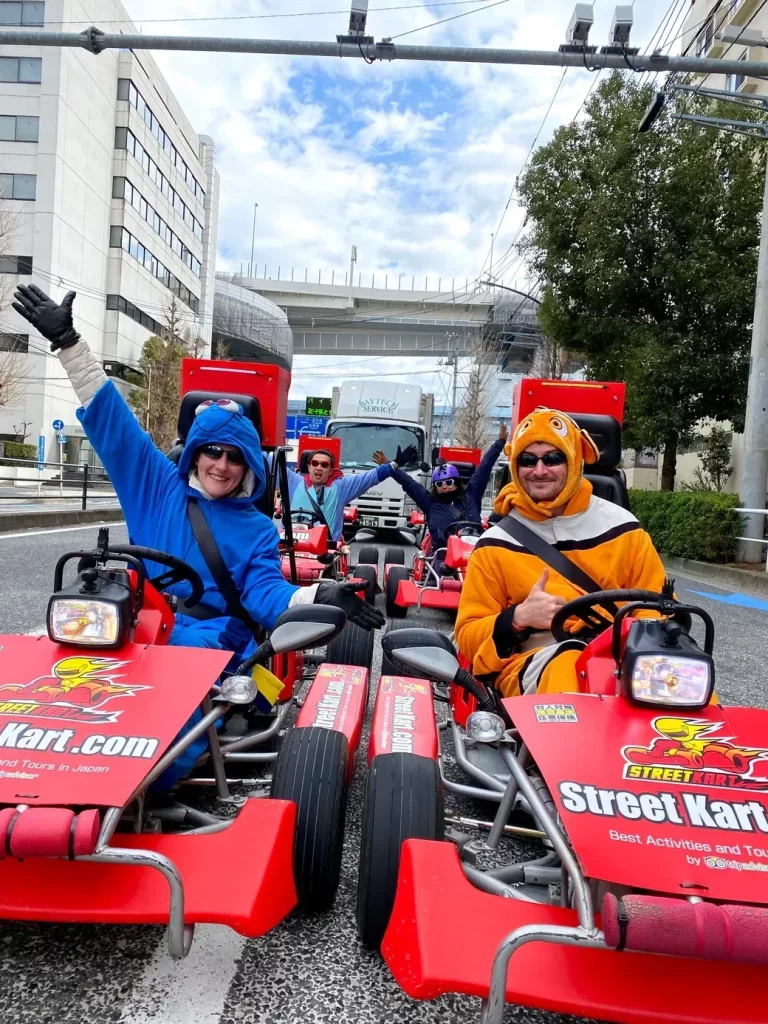
Enjoy a Street Kart Adventure in Tokyo’s Morning: About One Hour of City Cruising Starting from Shibuya
Tokyo mornings have a way of looking completely different depending on the hour, even within the same Shibuya area. Before the flow of commuters and shoppers really kicks into gear, the movement of the intersections, the depth of the streets, and the outlines of the buildings are all relatively easy to take in. That makes it surprisingly easy to get a feel for the city’s character, even in a short window of time. One efficient way to soak in this morning side of Tokyo is a street kart adventure starting from Shibuya—a choice well worth considering.
A street kart experience gives you a perspective that’s different from walking, making it easier to see the continuity of the city. Areas like Shibuya, Harajuku, and Omotesando may look close together on a map, but in reality their atmospheres, the flow of pedestrians, and the character of the streetscapes differ quite a bit. On the roughly one-hour course around Shibuya, you can follow these changes all at once. Slotting it into the first part of your Tokyo sightseeing makes it easier to understand the rest of your day’s strolling, too.
The official site introduces two courses in the Shibuya area: “Tour HS” and “Tour H2S.” Both are set at about one hour and feature a route that starts around Shibuya and flows through areas including Omotesando and Harajuku. You can check the details for booking and information at the official kart.st site.
Why Tokyo Mornings Pair So Well with a Street Kart Adventure
The Tokyo morning is a time of day when it’s easy to plan both sightseeing and getting around. Even if you have museums, shopping, cafés, or observation decks on the schedule for the afternoon, making use of about an hour in the morning helps you get a feel for the city’s geography right at the start of your day. From Shibuya to Harajuku and Omotesando, each area has a clearly distinct character, so even in a short time the differences in impression really stand out.
Shibuya has that sense of density around its giant video screens and intersections, with movement that feels every bit like the heart of the city even in the morning. Step into Omotesando, on the other hand, and the open sightlines and the orderly arrangement of buildings give a more composed impression. In Harajuku, elements of pop culture and fashion come to the front. Being able to see these shifts not as isolated sightseeing spots but as a “flow of movement” is one of the great features of a Tokyo street kart adventure.
The morning is also a time that connects easily to the rest of your plans. Grabbing breakfast or brunch in Shibuya after the tour, heading straight toward Omotesando for some shopping, or revisiting the Harajuku area on foot—it all makes for a flexible itinerary. Especially for first-time visitors to Tokyo, experiencing how the major areas sit in relation to one another right at the start makes later decisions about getting around that much easier.
How to Look at the Roughly One-Hour Course from Shibuya
Highlights of Tour HS
In the Shibuya shop information on the official site, Tour HS is introduced as a course of about one hour. As described, it heads from central Shibuya along Dogenzaka, taking in the Shibuya Scramble Crossing, Omotesando, and Harajuku before circling back. Because it begins with Shibuya’s urban density and moves through the polished streets of Omotesando and the distinctive scenery of Harajuku, it’s structured so you can see areas with very different personalities all in one continuous flow within Tokyo.
The appeal of this course is that it lets you understand Shibuya not in isolation, but together with how it connects to the surrounding areas. The Shibuya Scramble Crossing is a classic Tokyo sightseeing sight, but if you only capture its immediate surroundings, it can be hard to grasp the broader reach that Shibuya has. With Tour HS, after taking in the energy around the crossing, you move on to Omotesando and Harajuku, making it easier to feel how Shibuya connects with the culture around it.
When you trace this flow in the morning, another nice point is that—before the city becomes completely crowded—it’s easy to compare the signs along the roads, the lineup of buildings, and the difference in atmosphere from area to area. It’s well suited not just to those after great photos, but also to anyone who wants to understand the city of Tokyo in a more three-dimensional way.
Highlights of Tour H2S
In the official information for the Shibuya Annex shop, Tour H2S is also listed as a course of about one hour. This one is structured to pass along Dogenzaka and head through the Shibuya Scramble Crossing, Omotesando, and Harajuku. The official description, too, highlights the energy of Shibuya where neon and crowds gather, the shift into Omotesando, and the pop-culture feel of Harajuku.
Compared to Tour HS, Tour H2S leaves you with a stronger sense of the quintessential Shibuya cityscape right up front. In particular, the flow from Dogenzaka toward the Shibuya Scramble Crossing lets you catch the iconic feel of the Shibuya area early on, making it a course worth considering for anyone who wants to see “that classic, Tokyo-style city-center scenery” in a short amount of time.
That said, it shares the same quality of not ending with Shibuya’s density alone, but moving on afterward to the different faces of Omotesando and Harajuku. So it suits not only those who simply want to see a lively city, but also anyone who wants to experience the differences in rhythm within Tokyo all at once. Work it into your morning hours and you’ll likely deepen your understanding when you revisit the same areas on foot afterward.
What It Means to Cruise Shibuya, Harajuku, and Omotesando in the Morning
When sightseeing in Tokyo, some people split Shibuya, Harajuku, and Omotesando across separate days. In reality, though, they’re neighboring areas, and seeing them as one continuous context makes the impressions easier to organize. Tracing the roughly one-hour flow first on a street kart adventure helps you quickly grasp “which area is what kind of place,” which pays off for the rest of your stay.
Shibuya has a central feel, with large intersections and commercial facilities clustered together, making it an area where you can sense the speed of the city. Harajuku brings fashion and youthful culture to the front, while Omotesando is characterized by its open sightlines, architecture, and the way the brand shops line up. Seeing all of these together in the morning gives you the practical advantage of being able to judge where to spend more of your time later in the day.
The morning is also when you still have plenty of energy left for the day. Walking distances tend to get long on a Tokyo trip, so getting a feel for the atmosphere of the major areas early on means you can move with a clearer focus in the afternoon. The idea of using a Tokyo street kart adventure as the starting point of your sightseeing plan makes good sense in this respect, too.
License Requirements to Confirm Before You Take Part
When considering a street kart adventure, the first thing to confirm is your driving qualifications. License requirements directly determine whether you can take part, so checking them before booking is essential. The official site provides details on the required documents and the license categories that apply.
Always confirm license-related details on the official information page. The reference is the official driver’s license information page.
According to the official guidance, the documents needed to drive legally in Japan vary depending on your country of origin and the type of license you hold. Generally, the categories are laid out by condition—such as a Japanese driver’s license, an International Driving Permit based on the 1949 Geneva Convention, a license from an applicable country together with a Japanese translation, or SOFA-related documents. Which documents you need has to be checked based not on your nationality, but on which country or region issued your license.
Also, since missing documents on-site can sometimes prevent you from taking part, it’s practical to confirm in advance whether originals are required and how supporting documents are handled before you depart. Trying to sort it out during your trip can mean you run out of time for the procedures, so checking the official kart.st site together with the license information page at the booking stage will help you keep the day’s flow organized.
Tips for Working a Morning Tour into Your Tokyo Sightseeing
If you want to make the most of a morning street kart adventure, it’s easier to plan when you think about what comes before and after, too. For example, before the morning tour, allow some buffer in your travel time as you head into the Shibuya area, and afterward, structure your day so you revisit Harajuku or Omotesando on foot. That makes it easier to connect the scenery you saw from the kart with how it feels on the ground.
The Shibuya Scramble Crossing is a place whose impression easily changes with the time of day. Get a feel for the flow in the morning, then revisit in the afternoon or evening, and it’s easy to compare the volume of people and the changing light of the city. Since Omotesando is characterized by the continuity of its streets and the way its architecture comes into view, it’s also efficient to see the overall picture in the morning and then circle back to just the shops or cafés that caught your eye in the afternoon. The same goes for Harajuku—getting a sense of the whole street’s atmosphere first makes it easier to narrow down where to stop during a walking stroll.
On a trip where time is limited, how you use that one hour in the morning can change the density of your whole day. When you think of a Tokyo street kart adventure not just as a standalone activity but as the introduction to that day’s city sightseeing, its place in your itinerary becomes much clearer.
For Those Who Want to See Tokyo’s Morning from a Different Angle
Too close to grasp the full picture on foot, yet hard to feel the continuity of the city by train alone—for anyone who wants to take in the relationship between Shibuya, Harajuku, and Omotesando all at once in about an hour, a street kart adventure starting from Shibuya is an option well worth considering. The Tokyo morning is a time of day when you can see the city’s outlines before it fully accelerates, making it easy to organize your impressions even in a short window.
Tour HS at the Shibuya shop and Tour H2S at the Shibuya Annex shop, both of which you can check in the official information, are each structured to trace the major areas around Shibuya in about an hour. If you want to make good use of your morning hours in Tokyo, or to feel the differences between Shibuya, Harajuku, and Omotesando within the flow of movement, it’s a good idea to first check the latest details on the official kart.st site. If you need to confirm the participation requirements, referring to the official driver’s license information page as well will help you get your preparations under way.
At our shop, we do not rent out costumes related to Nintendo or “Mario Kart.” We provide only costumes that respect intellectual property rights.
At our shop, we do not rent out costumes related to Nintendo or “Mario Kart.” We provide only costumes that respect intellectual property rights.
A Note About Costumes
At our shop, we do not rent out costumes related to Nintendo or “Mario Kart.” We provide only costumes that respect intellectual property rights.

