
Less Prep, More Breathing Room in Tokyo's Short-Day Season: Enjoying a Street Go-Kart Tour With Companions of Different Ages and Energy Levels
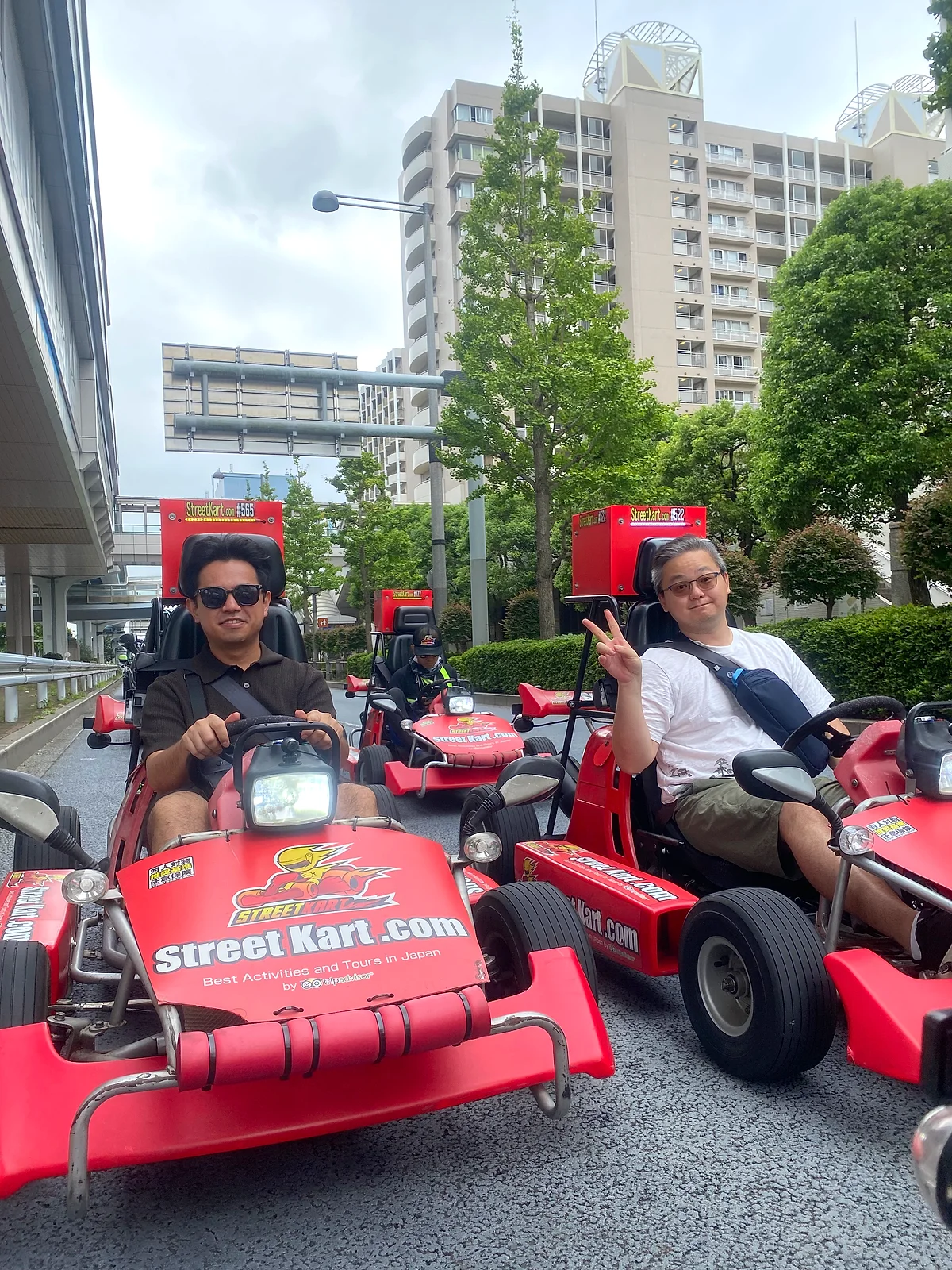
Less Prep, More Breathing Room in Tokyo's Short-Day Season: Enjoying a Street Go-Kart Tour With Companions of Different Ages and Energy Levels
In winter, the Tokyo sky starts changing color while it's still afternoon. At an hour when my American instincts say "Wait, it's not even evening yet," office windows start lighting up one by one. I've lived in Japan for five years, and how early it happens still surprises me.
When you're traveling with people of different ages and energy levels, those early sunsets matter. Your itinerary slowly gets tighter.
So what do you do? Packing more into the schedule isn't the answer. The answer is to cut down on prep work and leave yourself some breathing room.
Using a street go-kart tour on your itinerary as an example, I'll sort out which prep you can skip and which you can't.
Why Does Prep Take Up More Time When the Days Are Short?
When the days are short, people tend to think, "Let's get everything done while it's still light."
So the research piles up. You check transfers more often. You run through the packing list more often. Then add the cold. Older companions get tired just from putting their coats on and taking them off, and they often need more breaks and bathroom stops than in summer.
Each of these is minor. But they add up, and everyone is a little worn out before you even leave. You see this a lot on winter trips.
Here's a classic foreign-tourist moment: you look up the same transfer in your map app over and over, or you freeze in front of the ticket gate wondering which exit to take. That eats up more time than you'd expect. In the U.S., door-to-door by car is the norm. In Japan, you mostly get around by train and on foot, so every trip brings a small "Now what?"
In other words, prep work really comes down to how many decisions you have to make. If you make those decisions before the trip, the time you'd spend hesitating on the day simply disappears. In the short-day season, the thing that helps is making your decisions ahead of time.
Another thing to watch when planning your days: don't put physically tiring activities and mentally tiring activities in the same time slot.
For example, on the day of your kart tour, go easy on hopping between museums beforehand or taking a long trip on a train line you've never used. On days without the tour, take care of research and souvenir shopping all at once. When each day has a clear purpose, you're less likely to feel the "We still haven't done that..." panic, even when it gets dark early.
For older companions, a schedule where you can say "This is all we're doing today" is a relief all by itself.
The One Bit of Prep You Can't Skip: Who Can Drive
To be honest, some prep can't be cut.
The karts are single-seaters. Nobody can ride along as a passenger. And whether someone can drive depends on conditions such as age and their driver's license.
This article won't spell out those conditions definitively, because they vary by country and license type. For each companion, check the required license type, how International Driving Permits are handled, and what to bring on the day on the official driver's license page. Please refer to the official website for details.
Get this checked before your trip, and a whole set of day-of decisions goes away.
Once it's clear who's driving and who isn't, you can decide in advance where the non-drivers will wait. If you arrive in Tokyo with this still unsettled, you'll end up digging for documents in front of the shop or figuring out on the spot what the non-drivers will do. On a short winter afternoon, that's time you could have spent better.
If someone in your group doesn't have a license, or finds it hard to sit for a long time in the cold, it's easier on everyone to plan from the start for them to enjoy the day from the waiting side.
The things you bring are another place where hassle creeps in. Put the items each driver will likely need on the day, like passport, driver's license, and International Driving Permit, into one pouch per driver. That alone saves you from rummaging through your bag once you reach the shop. What's required depends on your license type, so the official page above is your reference here too.
Winter coats have lots of pockets, which makes "Where did I put it?" more likely. Yes, another classic foreign-tourist moment.
How Much You Can Cut Down on Booking and Travel
Book early, and check the cancellation terms at the same time
Bookings are accepted via Facebook, LINE, and email. The contact details are listed on the Street Kart official website, so find them there.
Weekends tend to fill up, so booking early is recommended. If your trip includes a weekend, sign up right when you book your flights and hotel. That way you won't have to keep wondering whether there's still a slot.
Also, cancellations made up to 7 days in advance are listed as free. If you're traveling with older companions whose health can be hard to predict, it's worth keeping this in mind. Check the details on the official website.
A word about language, too. The website is available in 22 languages. Guidance during the tour itself is generally in English. Guidance in Japanese or other languages depends on the staff that day and can't be guaranteed. If someone in your group isn't comfortable with English, it's a good idea to send any questions through the official website in advance.
Let the train handle travel, and don't drive there
The shops have no parking. Plan on public transportation.
The trick to reducing hassle here is choosing a shop you can reach from your hotel with no transfers, or just one. For example, the Shibuya shop is a 5-minute walk from Shinsen Station, the Shinagawa shop is a 3-minute walk from Kita-Shinagawa Station on the Keikyu Main Line, and the Tokyo Bay shop is an 8-minute walk from Shin-Kiba Station. When the shop is close to the station, you spend less time walking in the cold and less time getting lost.
If everyone's transit IC card is topped up, nobody has to count coins at a ticket machine.
For clothing, the safe bet is to dress as if you'll be outdoors in winter with wind in your face. Gloves and something to cover your neck make a big difference. Raincoats are provided on rainy days, but plan on bringing your own protection from the cold. Checking the official website before you go for how weather is handled and what to wear will keep you from scrambling on the day.
Choose a Shop With a Place for Both Drivers and Non-Drivers
For groups with a wide age range, the key is making sure the people waiting don't end up standing around under a cold sky for the whole tour. Whether there are indoor places near the shop changes which one you should pick.
The Shibuya shop and Shibuya ANNEX are in almost the same spot. The tour passes through the Shibuya Scramble Crossing and the zelkova-lined avenue of Omotesando. The moment the light changes, waves of people surge in from every direction, and you watch it all from a driver's seat just above the pavement.
For those waiting, Shibuya Scramble Square and Shibuya Hikarie are about a 10-minute walk from the shop. They're indoors and warm, with plenty of shopping and restaurants, so even companions who are low on energy can settle in comfortably. Shibuya Scramble Square also has an observation deck, Shibuya Sky.
The Shinagawa shop's route runs around Shinagawa Station, with views of the Rainbow Bridge from the Shinagawa side and Tokyo Tower in the distance. For those waiting, there's atré Shinagawa, connected directly to the station, and the Starbucks Shinagawa Grand Commons store, a 5-minute walk from the shop. Shinagawa Shrine, also 5 minutes away on foot, has a Fujizuka (a miniature Mount Fuji), but it involves climbing stone steps, so think of it as an option for those with strong legs.
The Tokyo Bay shop is in Shin-Kiba, and its route includes the Rainbow Bridge, Tokyo Tower, and the Odaiba area. The 798-meter Rainbow Bridge is lit up in seven colors at night. Check the official website to see whether there are tours after dark and which time slots are open. For those waiting, CASICA, a café and restaurant at Shin-Kiba Station, is one option.
Akihabara has a first and a second shop, also in roughly the same area. Chuo-dori, lined with the electronics district's signs, has that unmistakable Akihabara feel. Those waiting could also take the train about 5 minutes to Ueno Park and spend time at indoor spots like the Tokyo National Museum.
Whichever shop you choose, the trick is not to schedule anything right after the tour. After riding in the winter wind, your body is colder than you think. Once the drivers and the people who waited meet back up, start by catching your breath somewhere warm. If you write that time into the schedule from the start, nobody has to panic about making the next train.
At the Shinagawa shop, those with energy to spare can walk 20 minutes along the canal to Tennozu Isle, and everyone else can settle into a restaurant near Shinagawa Station. With two options ready for after you meet up, you can choose based on how tired everyone is that day.
Why Put Street Kart on Your Itinerary
From the standpoint of prep work, the biggest point is that it's a guided tour. A trained guide drives at the front and leads the group. Each shop has a set route, so you don't need to memorize directions. "Just follow the kart in front." In an unfamiliar city, that kind of ease is a real plus.
Next is language. The website supports 22 languages. Guidance during the tour itself is generally in English. In my experience, having just one English speaker in the group helps everyone relax quite a bit. Learning one handy phrase, "Sumimasen" (excuse me), gives you an easy way to get the staff's attention when you need help.
Third is the choice of shops. Of the 9 shops nationwide, 7 are in Tokyo. However, the two Akihabara shops and Shibuya plus ANNEX are each in nearly the same location, so by area the main hubs are Shibuya, Akihabara, Shinagawa, and Tokyo Bay. Compare them with the train lines closest to your hotel and decide where to start.
Fourth, getting around becomes sightseeing in itself. When the days are short, the time you have to visit attractions one by one is limited. The tour routes include famous spots like the Scramble Crossing and the Rainbow Bridge, so your time driving doubles as time taking in Tokyo's sights.
Fifth is the track record. As of November 2023, there had been more than 150,000 tours in total, more than 1.34 million customers, more than 20,000 reviews, and an average rating of 4.9 out of 5. These are figures from that time, but they're useful to weigh when you book for the first time.
And finally, there's the feeling you only get by riding. An open-top kart with a low seat close to the ground. The cold winter wind hits your cheeks, and the engine of the bus right beside you and the sounds of the intersection come straight to your ears. The Tokyo you'd been watching through a window is suddenly within arm's reach. This is the one part that stays no matter how much prep you skip.
Leave Some "Do Nothing" Time in Your Schedule
If you're spending Tokyo's short-day season with companions of different ages and energy levels, why not focus less on how much you schedule and more on how much breathing room you leave?
Rather than cramming sightseeing in before and after the tour, plan time for a warm drink or a break back at the hotel first. Personally, I think what makes or breaks a winter trip is whether you get to sit down between stops.
One thing I find interesting about living in Tokyo is that in winter, "head out early, head back early" feels just right. Back in the U.S., I tended to plan to be out until late at night. But in Tokyo, stations and shopping complexes stay bright after dark, so it's easy to go back to the hotel and then head out again for dinner. If you have older companions, just a short rest in the room after the tour makes a big difference in how much energy everyone has for an evening stroll.
There actually isn't that much you need to do.
Check who can drive on the license page. Pick a shop that's easy to reach from your hotel. If it's a weekend, book early. Decide on one indoor spot where non-drivers can spend their time.
That alone leaves almost nothing to puzzle over on the day. For information that may change, such as eligibility requirements, cancellation policies, and weather arrangements, check the latest details on the Street Kart official website before you finalize your plans.
In winter, Tokyo gets dark early, which also means the city lights come on early. Put some time driving through those lights on your schedule, along with a little breathing room.
This article was originally written in Japanese and translated using AI. Some expressions may read unnaturally, and we appreciate your understanding. For the most accurate and up-to-date information, please refer to the official site at kart.st.
Street Kart is not affiliated with Nintendo or the Mario Kart series in any way. We do not provide costumes of Nintendo characters, and such costumes may not be worn during tours even if brought by participants.